
Shifting Baselines
Seismic Public Lands Activity While Backpacking in the Great Basin

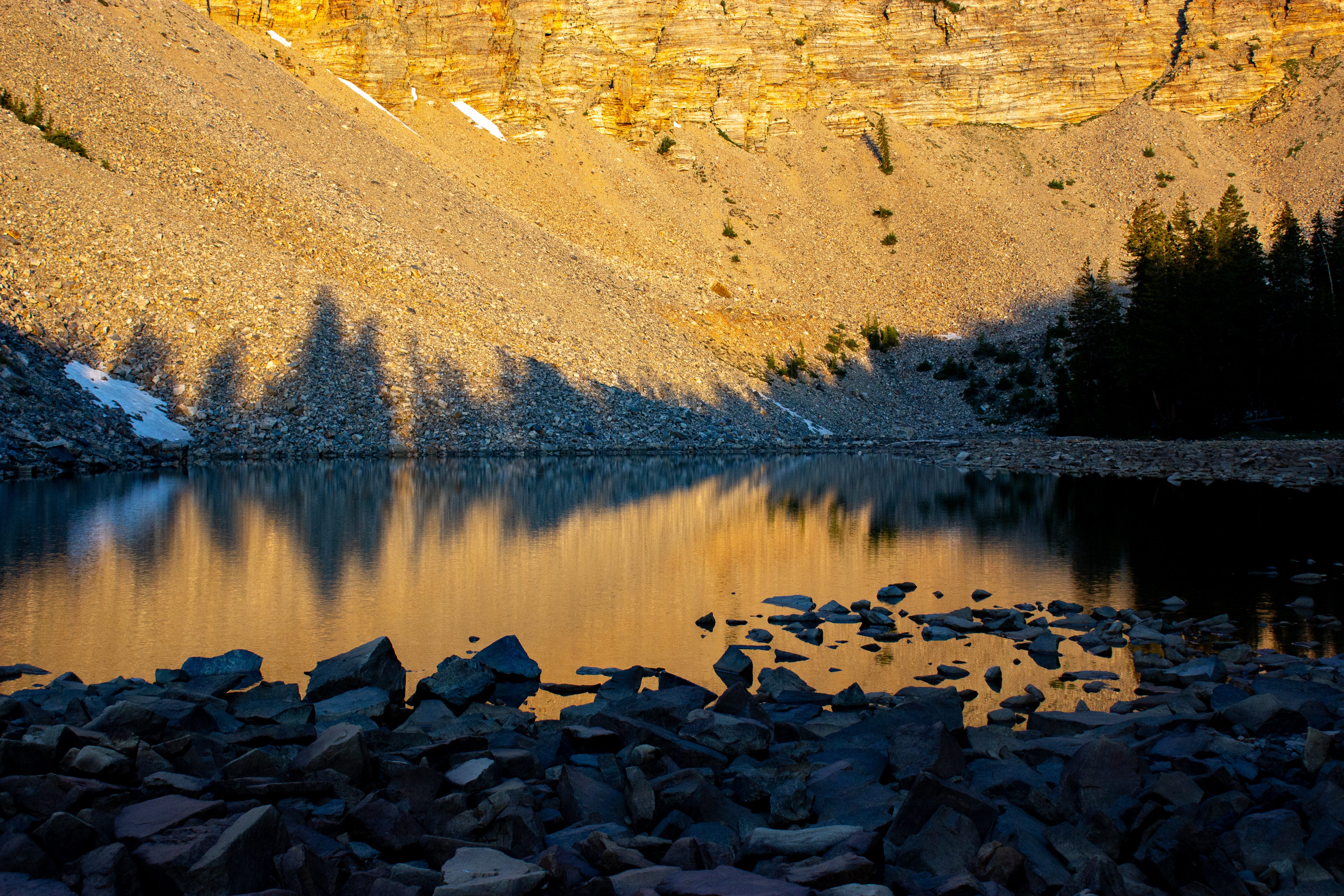
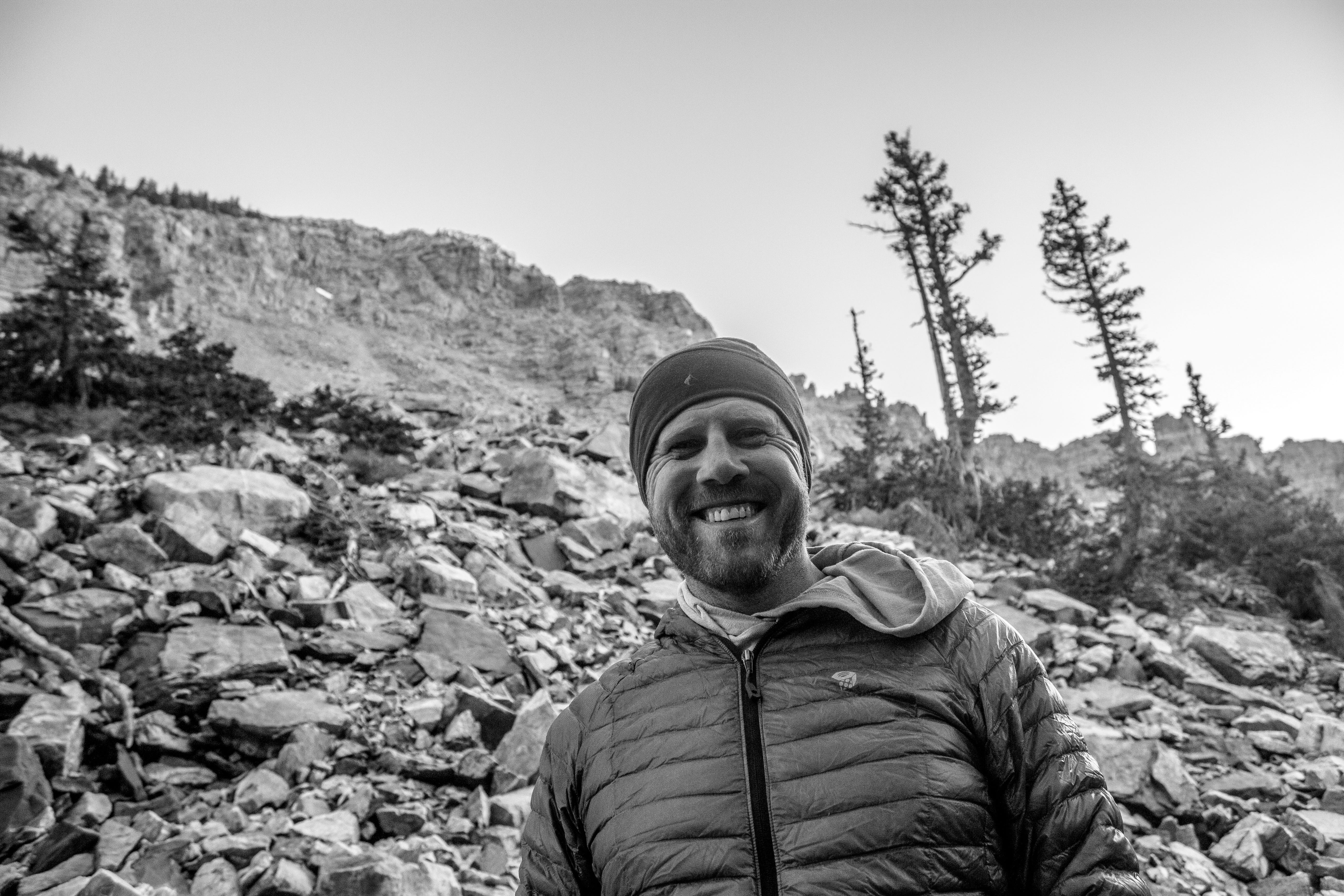
Climbing from 8,000 feet to well over 12,000, we ascended from the Great Basin’s cold desert flora––sagebrush, prickly pear, and piñon-juniper, to Sierra-esque alpine meadows teeming with wildflowers. We looked out at the highest point in Nevada and marveled further at the stark geological contrasts in the Great Basin.
It may seem like a great effort to pull me away from red rock canyons, but my personal geography has been equally sculpted by the West’s mountains. Without a permanent address, nomadicism pushes me to gather a sense of place. This is also helpful when you dwell among the West’s most expansive swaths of public lands. It takes effort––copious wandering with the companionship of maps––to understand where the hell you are. Not just in a fixed point, but within the context of the great American deserts. Reading landscapes is a form of literacy.
Understanding, and participating in, its management is another language…
Public Lands Are NOT For Sale
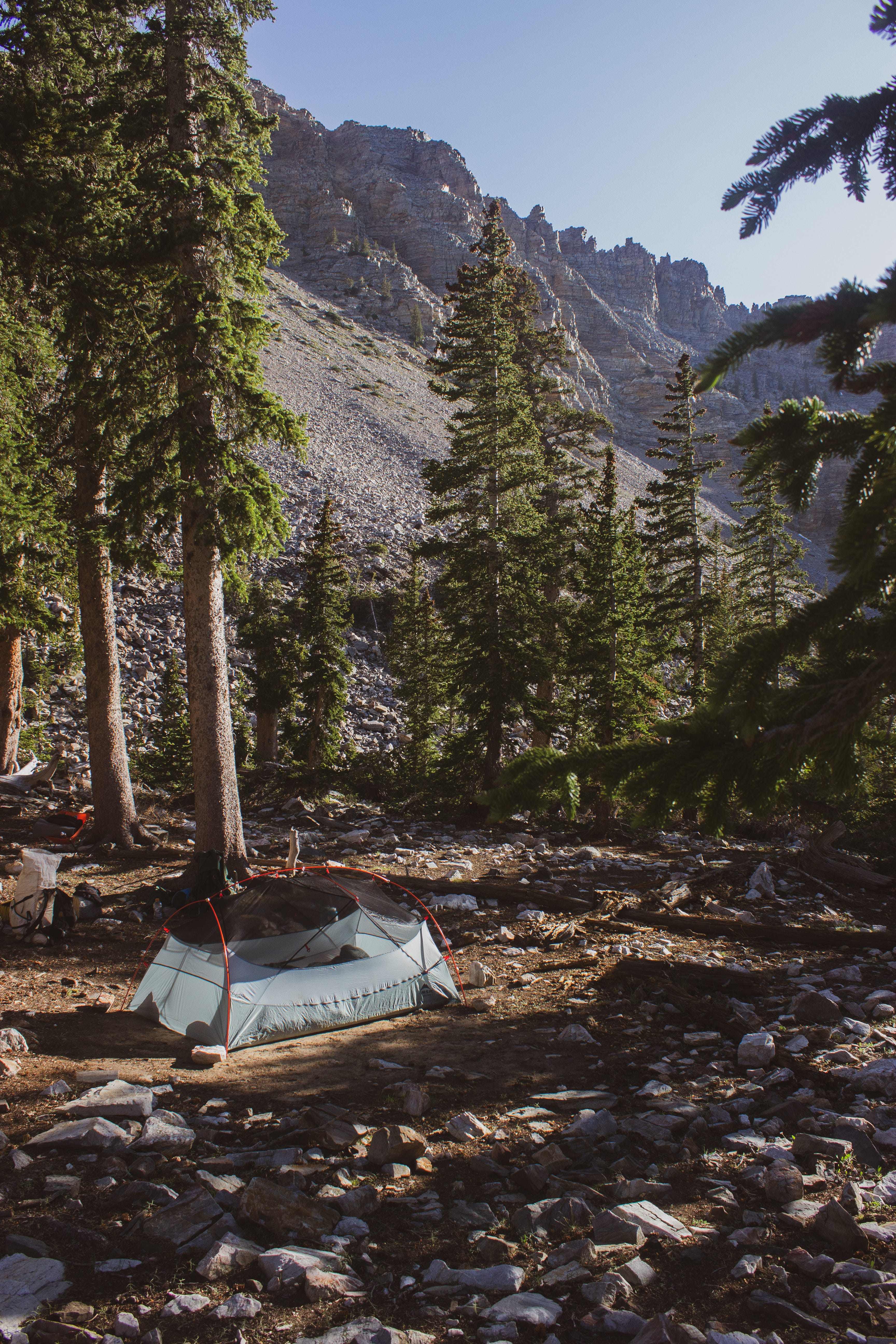
Apropos of my last post about “re-entry,” I normally loathe turning my phone on after a backcountry trip. I frequently drag that process out as long as I can get away with. This time I returned to good news: Mike Lee’s Public Land sale scheme was pulled out from the big bullshit bill. I took a deep breath of thin alpine air and looked out at the Great Basin stretching out several thousand feet below. The land could breathe too, I hoped. At least for a moment. Roll those sleeves up and pull out your phones.
With that nasty provision removed, there is still work to be done. The big bullshit bill was passed in the Senate via a tie-breaker by JD Vance. The bill is now back in the House awaiting a final vote in the next day or two. The bill is catastrophically bad for healthcare, rural hospitals/clinics, and clean energy. Dr. Len Necefer wrote an important breakdown of how it dismantles Tribal sovereignty. And the bill is still bad for public lands because it mandates increased oil leases and cuts Park Service funding by $267 million. Remember, humans are nature and this bullshit bill sells us out too.
All this is to fund tax cuts for billionaires and bolster racist deportations and war-mongering industries. Did I miss anything? Of course, but hopefully, that sounds rotten enough for you to keep calling your reps.
As for the sale of public land, Lee’s statement about the removal alludes to his unyielding belief that the federal government owns too much land:
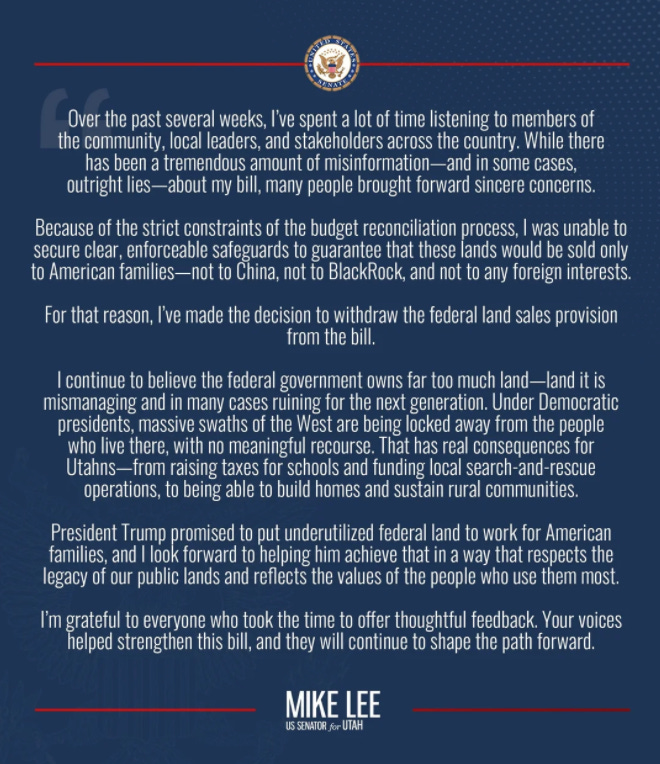
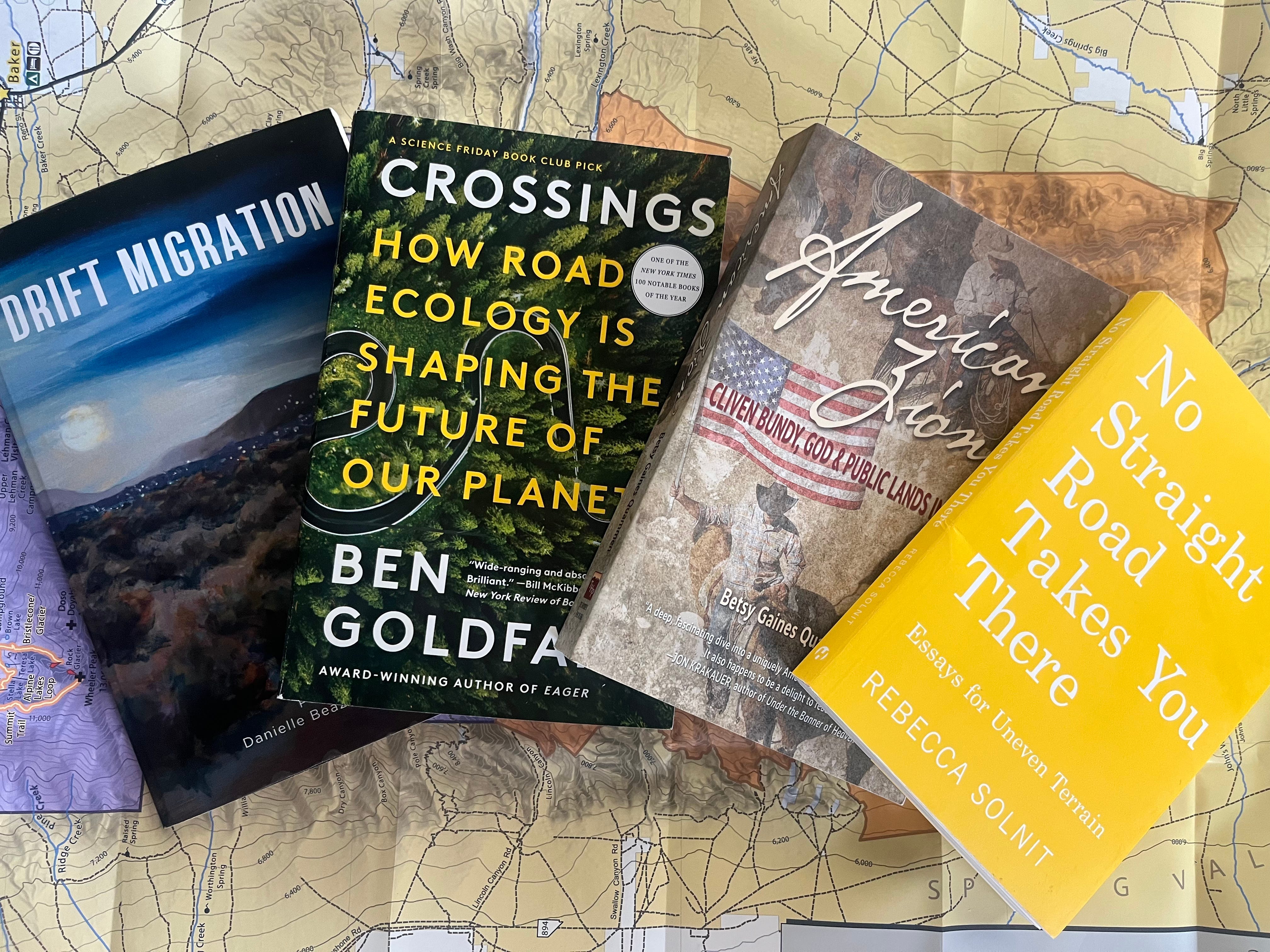
Like a used car salesman, his misleading statements overlook the fact that public lands already work for American families, and all people, by contributing $252 billion to the US economy and creating 949,000 jobs in 2024. No one is being locked out of public lands either. Although, the state of Utah spent $2 million in taxpayer money to convince people otherwise. To understand how state control might lead to privatization which would change public access forever, just look at Texas which is 95% privately owned. The origins of this generational mission for some Westerners are skillfully outlined in American Zion by my friend Betsy Gaines Quammen.
The Roadless Rule
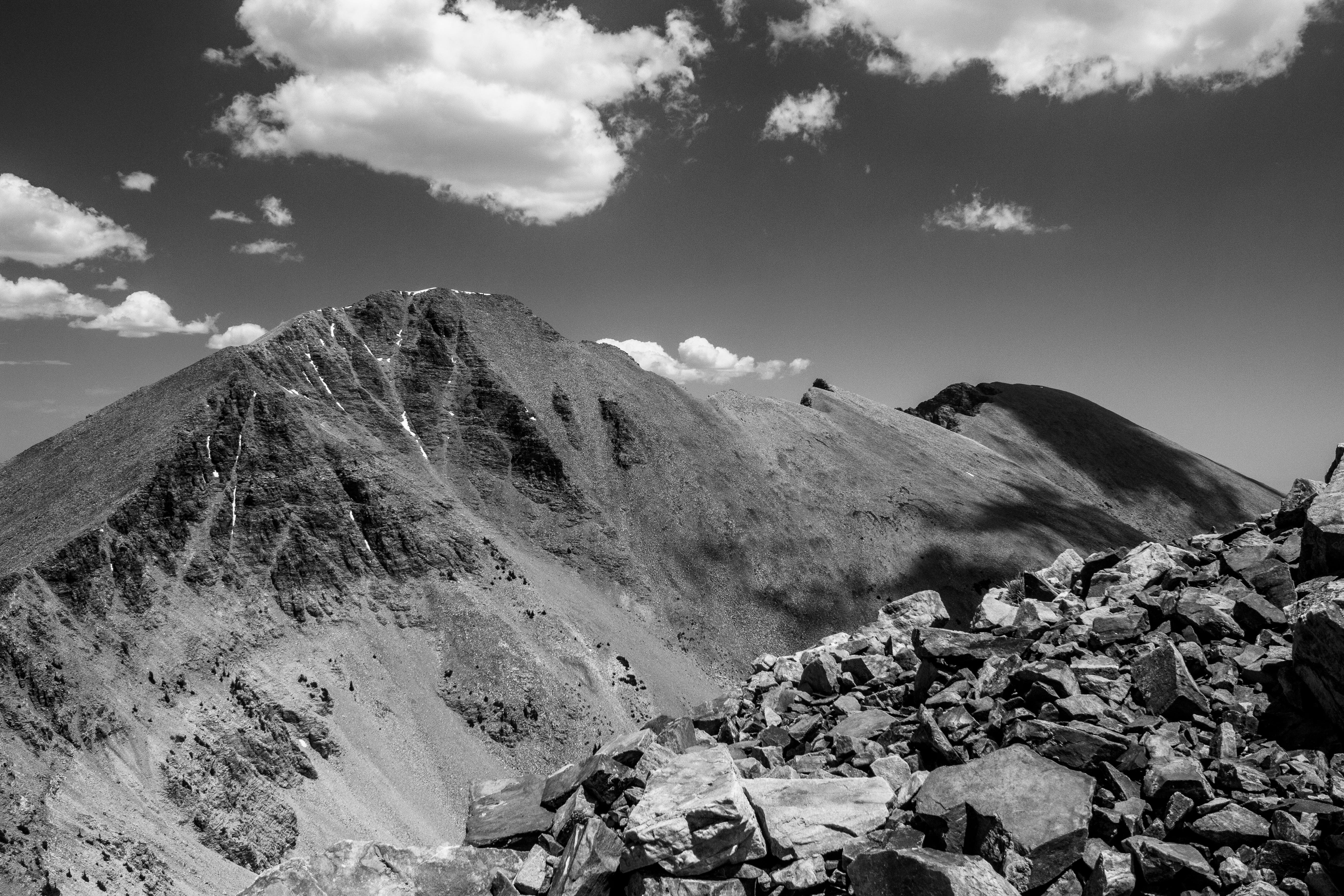
On the topic of access, the Trump administration announced it would rescind the Roadless Rule. The Trump administration rescinded the Roadless Rule in National Forests in tandem with a recent Executive Order to boost logging on Public Land. This Clinton-era law has prevented the creation of excess roads on 58 million acres of National Forests to protect habitat and watersheds.
The US has a lot of roads. It is an overstatement that closing some roads or preventing new ones in some areas prevents access to public lands. It just means that one cannot drive or clear-cut every inch of land. There are other lifeforms traveling within the forests to consider. The US Forest Service already operates the world’s largest road network, 370,000 miles, according to Ben Goldfarb in his book Crossings: How Road Ecology is Shaping the Future of the Planet.
His chapter “Roads Unmade” outlines how many of these roads were not intentionally built. Rather, they were the result of logging companies grasping for timber and then leaving abandoned tracks in the woods. “Even an abandoned road changes everything––the carbon cycling, the soil nutrients, the hydrology,” and wildlife habitat explains hydrologist Rebecca Lloyd to Goldfarb. Broad recognition of these impacts led to the Wilderness Act and the Roadless Rule.
All Quiet in the Great Basin
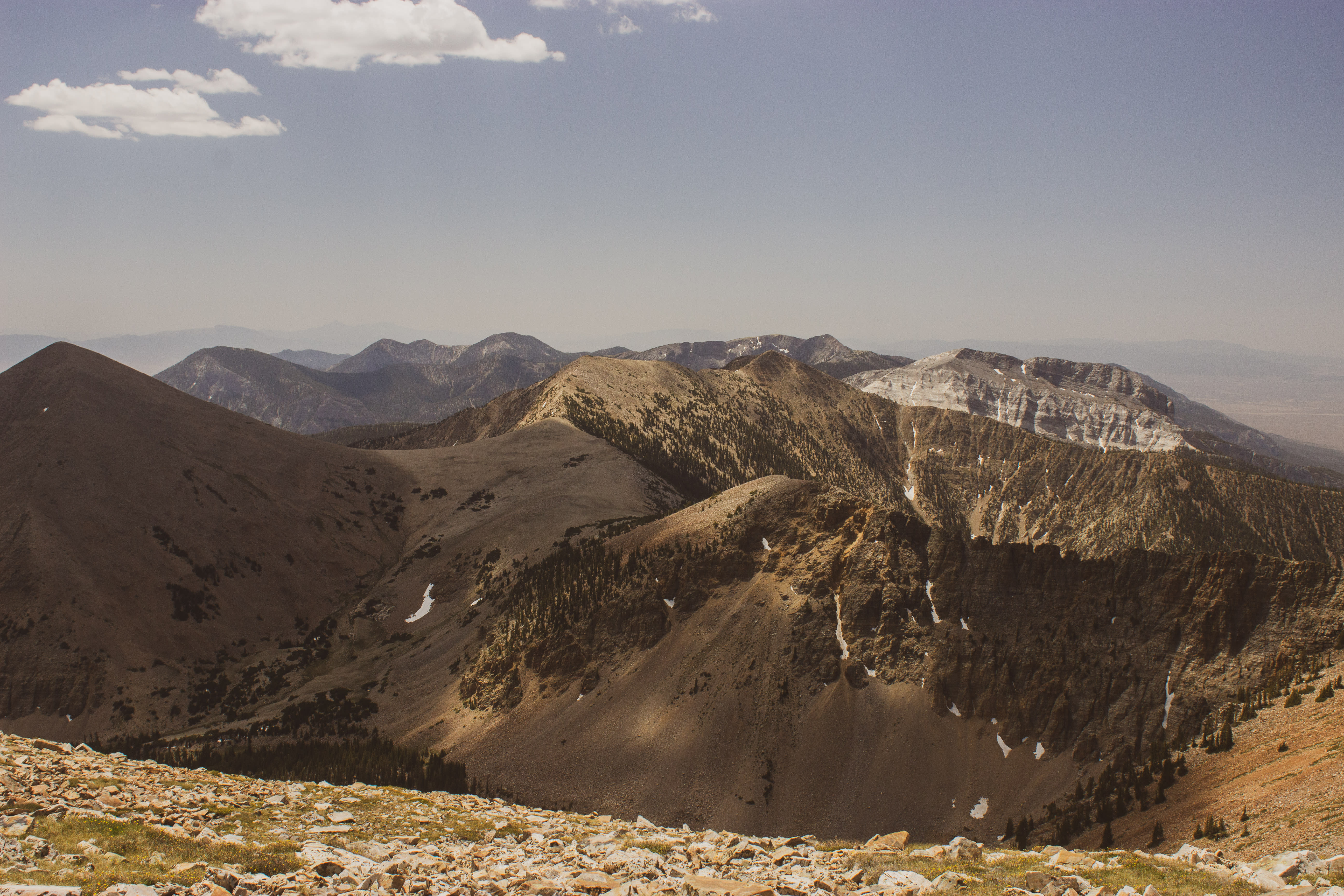
The vast sagebrush sea and high peaks of the basin and range region is an ideal place to contemplate the wild public lands activity shaking the West. 85% of Nevada land is public. Outside of the major cities, Las Vegas and Reno, much of it is undeveloped and unnoticed––at least in terms of broad public awareness. Yet, the Great Basin has a bullseye on it for the continued quiet onslaught of egregious efforts to remove land and water from public and Tribal domain.
There’s the proposed Cedar City pipeline that would siphon aquifer water from rural Utah and Nevada communities to spur more development and sprawl. According to Great Basin Water Network (GBWN), “The project will harm communities like Milford, Beaver and Baker. It will imperil places like Great Basin National Park, Fish Springs National Wildlife Refuge, the Great Salt Lake, and sacred tribal sites. The economies, the heritage, and the future of rural communities will be forever changed in the Great Basin.”
After driving through these areas, en route to last weekend’s backpacking trip, it is pretty clear that there is not enough water for this scheme. Nor is the plan supported by the Indian Peaks Band of Paiute Indians or respective, who were not included until the latest stages of this proposal. This video is worth 5 minutes of your time.
And despite the removal of Lee’s proposal, selling public lands (supposedly) for housing is not off the table in Nevada. While Nevada Democratic Sen. Catherine Cortez-Masto opposed Lee’s provision, it was because he did not work closely with other states and stakeholders. Fair, thank you. But, as GBWN Executive Director Kyle Roerink explained, Cortez-Masto has her own bill to sell Nevada public lands that, unlike Lee’s plan, does not include language to block foreign investors.
Pay Attention and Keep Stretching
I keep thinking I should be (more) depressed, but I find myself increasingly hopeful. In Rebecca Solnit’s new book No Straight Riad Takes You There she writes of hope that it is, “a sense that we don’t know what will happen but we might have room to participate in determining what will happen.”
Americans are awake. By and large, Western voters oppose the sale of public lands for housing. And we made this known in the outpouring of comments, calls, letters, and emails to Senator Lee leading up to the removal of his sales plan.
While it is great to see the energy and enthusiasm around this, it is just the beginning. We have to sustain this. Solnit aptly titled one of her new book’s essays, “On Letting Go of Certainty in a Story That Never Ends.” As I wrote earlier this year, the protection of U.S. public lands requires constant pressure to continue.
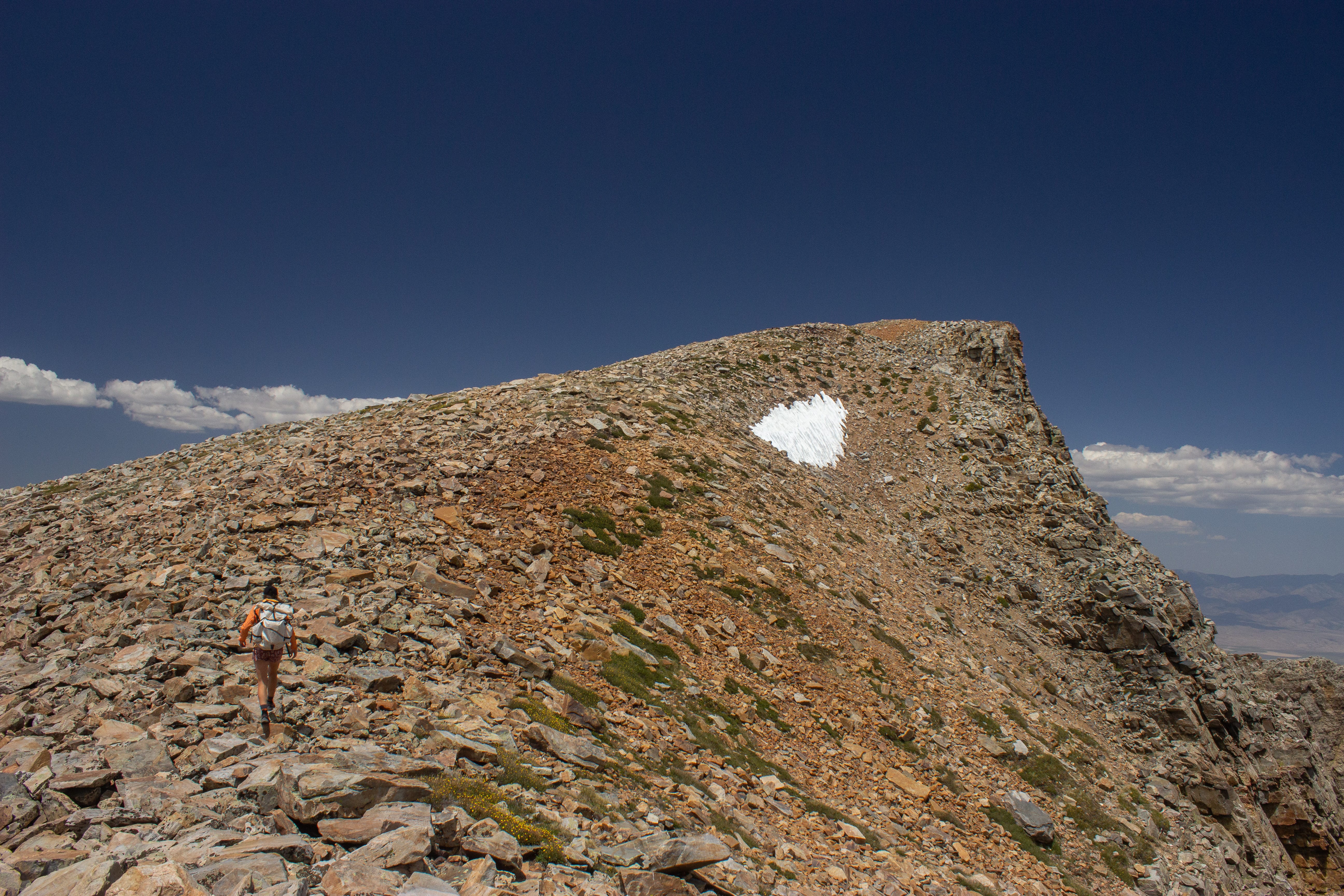
The Great Basin knows how to take a long view. The region, stretching from the Wasatch Front to the Sierra Nevada was once flooded by a shallow inland sea. Within the past 560 million years, those waters have drained, while tectonic forces shifted, lifted, and stretched the sea’s ancient sediments and metamorphosed volcanic rock. Later, glaciers sculpted peaks and lakes. The basin and range province continues to stretch itself today. I suppose we humans can follow its lead and do the same, for the land and each other, in the geological blip we are here.
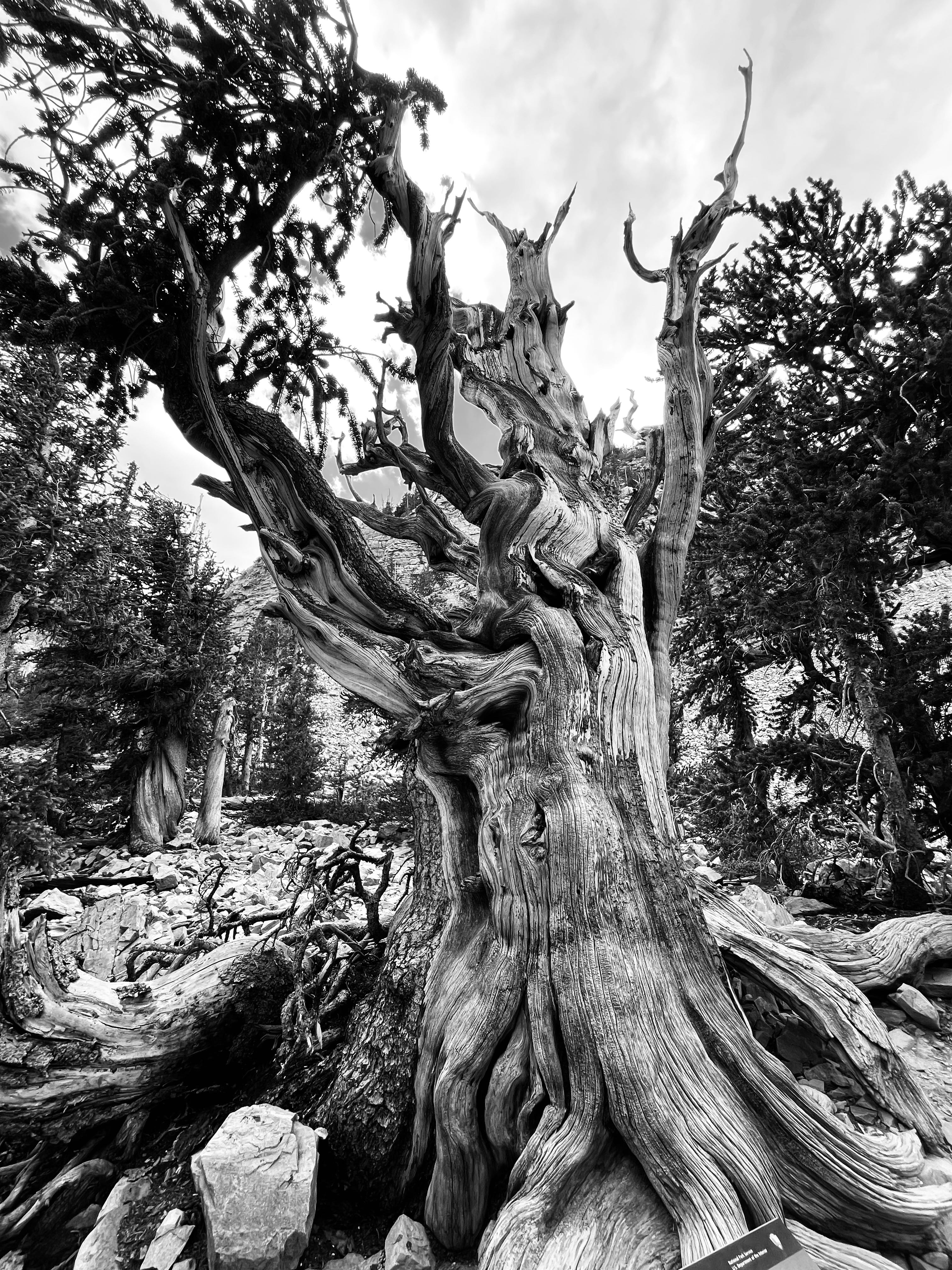
“If you free yourself from the conventional reaction to a quantity like a million years, you free yourself a bit from the boundaries of human time. And then in a way you do not live at all, but in another way you live forever. A million years is a short time - the shortest worth messing with for most problems.”––John McPhee, Basin and Range
I have some exciting literary news to share with you all, but it just does not fit the vibe of what poured out of me today, Writing is like that. Stay tuned for a detour from these public lands dispatches for something lighter.
Also, I highly recommend buying these books from your favorite indie bookstore or checking them out from your local library/bookmobile.
I was puzzled when I found the 'explanation" that these lands were to be sold in order to provide housing. In my home county the ONLY public lands that were NOT proposed for sale were the Forest Service properties surrounding the only town of any substance in the county which is desperately in need of affordable housing for the workers that serve the owners of multi million dollar vacation homes.
Maybe I wasn't talking to the "right" people, but here around Taos, the threat to selling off lots of national forest in our Sangre de Cristo and Tusas ranges wasn't making anyone happy. Not at all. And yeah, I don't see how it was going to contribute to affordable housing. Can't live easily on the land Mike Lee, et al. wanted to sell.