
You Can Literally Walk Everywhere
Countering lies and attacks on National Monuments (together) one step at a time.

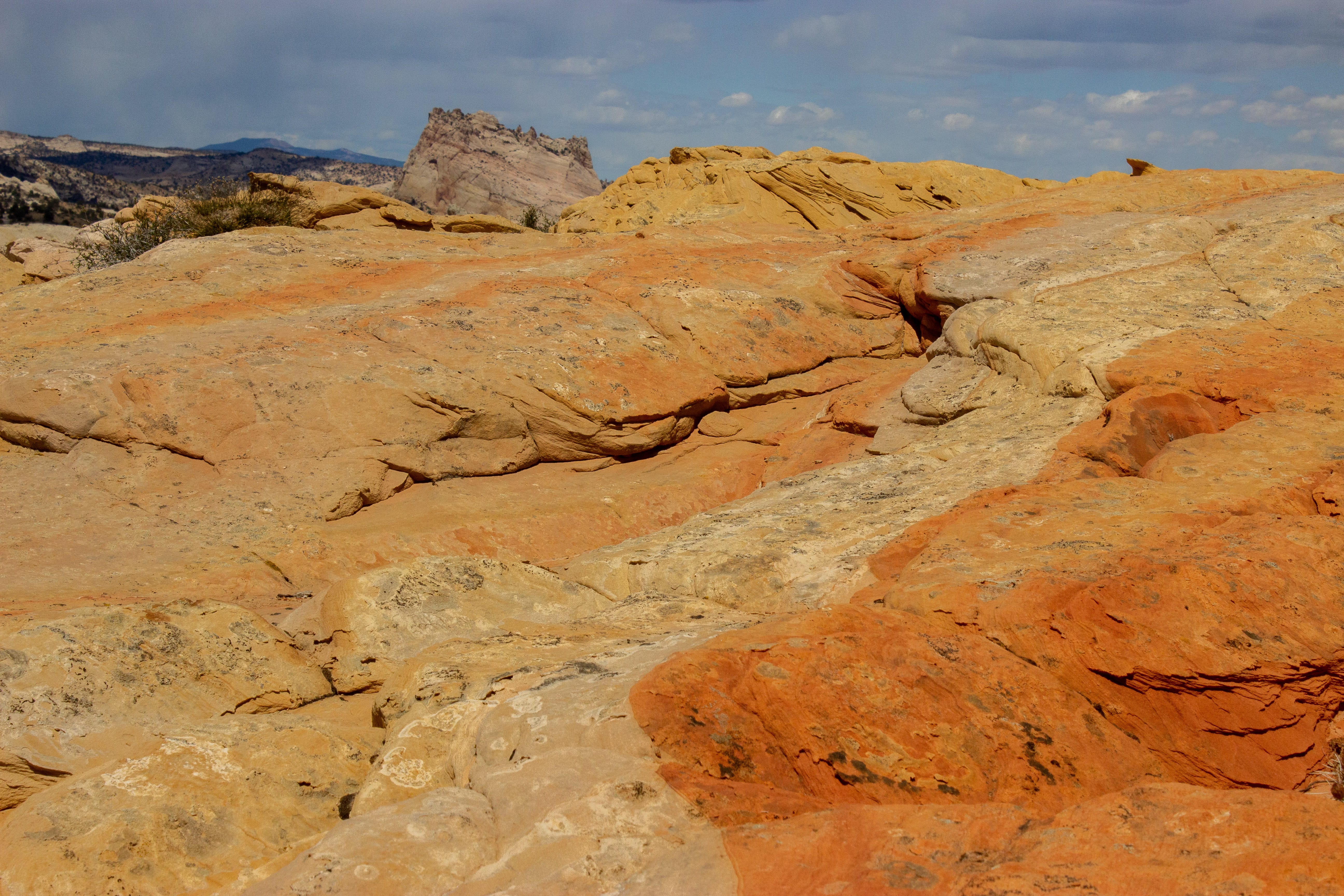
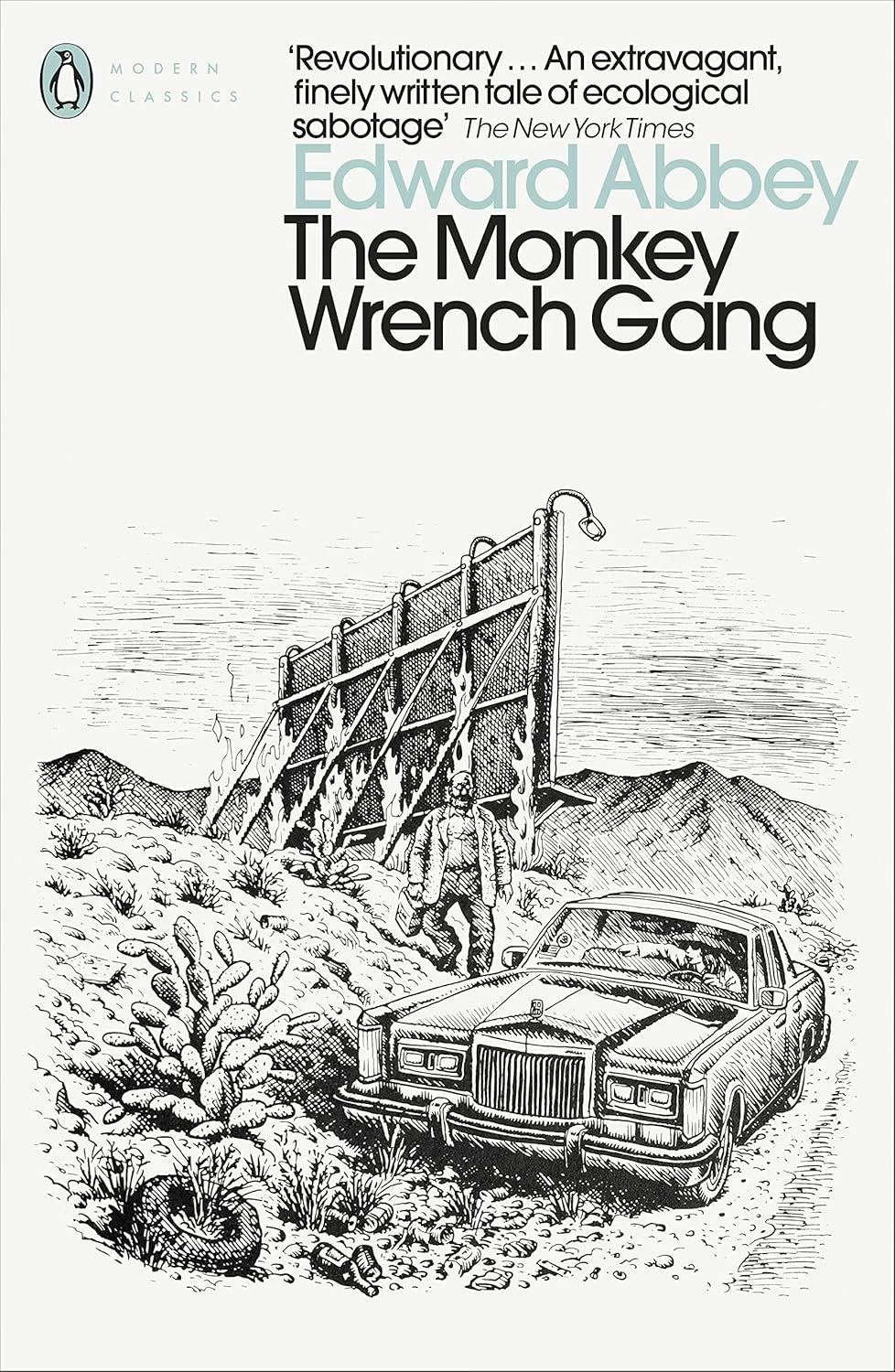
When the news about Trump’s second-term reductions of Grand Staircase-Escalante and Bears Ears National Monument hit, I turned up the stereo and let Tool rip. Eyes on the highway, I just let myself feel everything. Still, I was encouraged by two billboards that even the Monkey Wrench Gang would approve of:
“Defend our common hunting ground. Protect Bears Ears National Monument.”
“Defend our common ground. Protect Grand Staircase-Escalante National Monument.”
Common ground is not part of the so-called “common sense” plan to “right-size” the 1.89 and 1.35 million-acre monuments. Never mind that landscape-scale monuments have continued to be upheld by the courts over the past century. In 1908, the Grand Canyon was the first national monument designated to protect an area of 100,000 acres or larger. A few years later, an irked prospector took the federal government to court, citing that a president lacked the authority to designate such a large monument using the Antiquities Act because he was a prospector and he wanted access to MINE the Grand Canyon.
A year later, the Supreme Court unanimously disagreed with the disgruntled miner, affirming the Grand Canyon’s scientific value and denying the effort to dismantle the remaining portions of the monument. The areas outside the National Park remained a monument until 1975, when they were included in Grand Canyon National Park. Since that 1920 case, presidents have designated 38 still-standing landscape-scale national monuments, including Grand Staircase-Escalante in 1996 & Bears Ears in 2016.
The goal of dismantling these two monuments in Utah goes beyond the boundaries. It’s not a secret that monument opponents hope to test the Antiquities Act at the Supreme Court Level. And ultimately, as we saw with earlier failed proposals by UT Reps, they dream of selling public land. Maybe not today, but someday.
Utah Governor Spencer Cox, Sen. Mike Lee, Sen. John Curtis, Rep. Celeste Maloy, Rep. Mike Schiltz, and Interior Deputy Secretary Kate MacGregor stood behind number 47 with smiles as he signed the proclamation. In doing so, they ignored their constituents. 75% of Utah voters support protecting these monuments, as do 89% of voters in other western states.
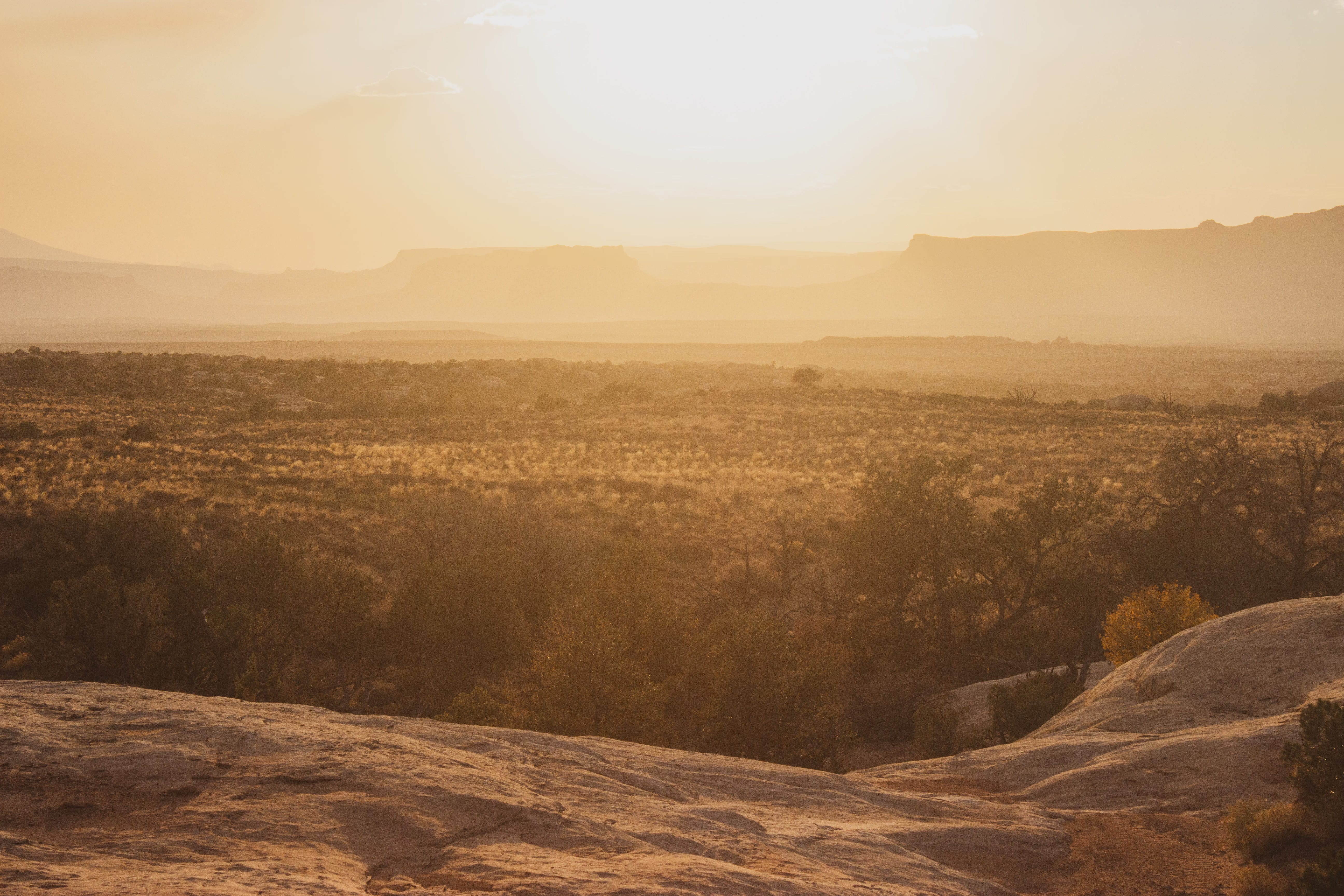
The contingency also added to the lies and disinformation. This is not our first monument reduction rodeo, but aside from the much larger reductions––90%––what hit differently this time was the lies.
“You can’t do anything. You can’t go hunting. You can’t go fishing. You can’t do anything. You can virtually not even walk on it.” To which Deputy Interior Secretary Kate MacGregor replied, “That’s exactly right, sir.”
Really?
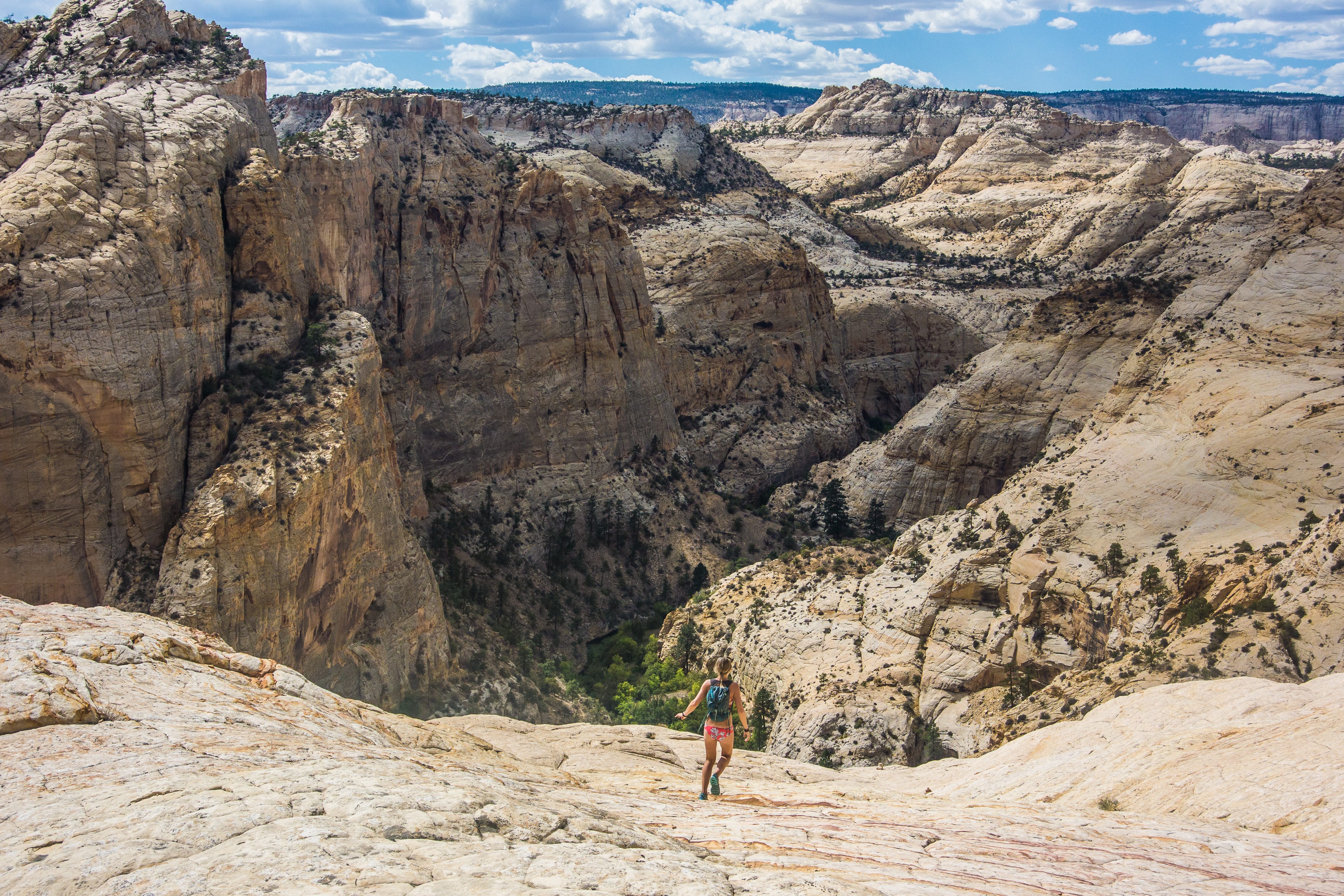
I spent my entire thirties roaming and fighting for over 3 million acres of public lands in Southern Utah. Thousands of miles on foot, afloat, and in my 4WD vehicle flashed through my head. In 2021, I spent forty days retracing a historic expedition through Bears Ears and Glen Canyon. Over three hundred miles. A surreal time-lapse of nine years of constant unrestricted access.
(Unless, of course, you are the kind of person who believes “access” means driving anywhere you please off roads. Then, be my guest.)


By slashing almost all of the monuments, this administration made it pretty simple to understand what is (according to them) NOT protected––almost everything. In an era of rampant development, in Southern Utah, one still senses how vast the world is, even if you never leave your neighborhood. It is impossible to know what should or should not be protected if you have never experienced its deeper folds.
We know that national monuments do not restrict access, not even to vehicles, despite the misinformation that some groups spread. Those who have never been here would be wise not to make such claims. Likewise, the removal of monument status does not change our ability to access these lands. This was never about what activity you like to pursue on public lands. It is about mineral and energy extraction:
Revising the boundaries will better align the use of these public lands with the public interest. The Grand Staircase-Escalante region contains several resources that are vital to our economic and national security. These resources include several critical minerals, such as chromium, cobalt, copper, iron, lead, manganese, molybdenum, nickel, silver, thorium, titanium, uranium, vanadium, zinc, and zirconium, create jobs, fuel prosperity, and are essential to important sectors of the economy of the United States, including defense, manufacturing, and transportation. It is imperative that the United States not be dependent on foreign sources of these resources. Modifying the Monument’s boundaries will help ensure that adequate domestic supplies exist, thereby reducing the threat posed by our Nation’s reliance on foreign sources. (Presidential Proclamation July 13, 2026)
To further this point, look at the environmental protection rollbacks that also occurred this week, but lacked the public attention of the monuments:
Weakening of protections for Grizzly Bears.
The passage of the Cadiz Pipeline in the Mojave Desert.
The proclamation also terminated the Bears Ears Commission. It is comprised of five tribes, Hopi Tribe, the Navajo Nation, the Ute Mountain Ute Tribe, the Zuni Tribe, and the Ute Indian Tribe of the Uintah & Ouray Reservation. Bears Ears National Monument was their vision to protect their homelands and this living cultural landscape.


In the words of the Commission:
Over the past several years, the Bears Ears Commission has worked alongside the Bureau of Land Management and U.S. Forest Service in developing and implementing the Bears Ears Resource Management Plan, a collaborative management framework grounded in Traditional Indigenous Knowledge and western science. The plan remains a historic achievement, demonstrating how Tribal leadership, Indigenous Knowledge, and western science can work together to care for one of America’s most significant regions in a way that protects the cultural, historical, ecological, and scientific values that make Bears Ears cherished by Tribal Nations and all who visit and experience it.
Removing the commission from monument management impacts Tribes working toward that same vision nationwide, including in Grand Staircase. Last year, the Grand Staircase-Escalante Inter-Tribal Coalition, comprised of the Hopi Tribe, Kaibab Band of Paiute Indians, Navajo Nation, Paiute Indian Tribe of Utah, Ute Mountain Ute Tribe, and the Zuni Tribe.
The coalition was formed “to ensure Tribal voices, perspectives, and priorities are meaningfully included in the management of Grand Staircase-Escalante National Monument (GSENM), and to advocate for the long-term protection of the Monument for present and future generations.”
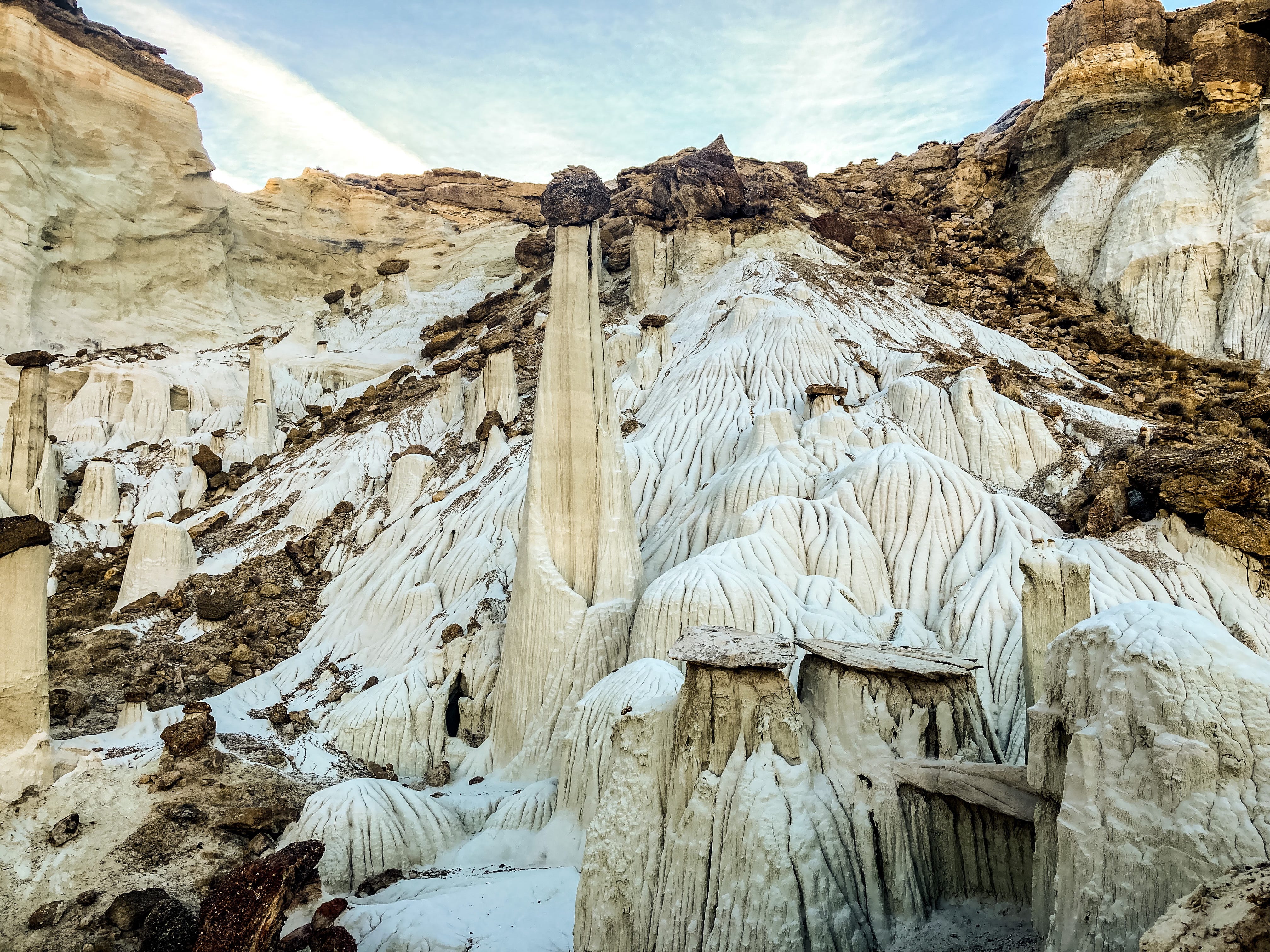
This week is filled with tension. If you stay too long on your social media feed, it might suggest that the masses have descended on Grand Staircase-Escalante and Bears Ears National Monument. Perhaps there are people with signs shouting in the streets. Maps are splayed out to decipher what portions of the monuments have been cut. People cheering in ATVs. That noise is mostly online. Outside, it's eerily quiet.
The roundtail chub darted around my feet as I walked through the thalweg of the Escalante River yesterday. The water rose in the afternoon as cloudbursts dropped sheets of water at the headwaters. The Kaiparowits remains stoic, looming over the monument, hoping to catch a wayward piece of the monsoonal moisture.
For Colorado River tributaries like the Escalante and the Paria Rivers, national monuments are among their most robust protections. Largely, to limit extraction impacts that harm water quality.


To step away and walk into a remote pinyon-juniper forest or down a desert river canyon is a tremendous privilege I never take for granted. But to protect these spaces, none of us can sit between sandstone walls without further action. Much of the work I do takes place on a screen, because most people, sadly, have their faces turned down to a device for a portion of the day. Through no fault of their own, it is by design and now part of the civilization we live in. My time away from technology in the backcountry gives me ample evidence that I sacrifice some of my well-being to participate in social media for the landscapes and rivers we love and need.
But that screen time also lacks nuance and creates further divisions between us that often look different in conversation than on an Instagram reel. Last night, I ended up chatting at a café with a guy I’ve never met before. He is a lawyer, which resulted in some banter about the legality of the reductions and what it might mean for the Antiquities Act. (That’s reporting for another time.)
While it was clear that we viewed the outcomes and responsibility of the government differently, he still knew his shit and understood the realities and reasons for the monument reductions (*mining*). The result was an engaging conversation that helped us both think through this issue together. We shook hands and thanked each other before heading out.
Aside from threats to the land, this is also something I fear the monument reductions, in tandem with social media, are attacking: our ability to hold conversations that encompass diverse perspectives. (And to decipher accurate information.) No two people think entirely alike on any issue. Including this one. However, (news flash) no one is having a landscape-scale change of heart because of an Instagram post. But we may be able to dismantle misinformation more effectively in real life. People respond better to heartfelt conversations than screens.
A conversation may not be enough, either, but I am not sure that is the only point. Democracy is about conversation, checks and balances, and we the people are best to remember how to engage in democratic discourse on the ground with each other and persist in demanding our elected officials do the same.
The land needs us, but it needs more than our hopes, prayers, and informed social media spam. This starts with calling or writing our members of Congress to urge them to oppose these actions. We all need to vote like this landscape, and our lives depend upon it.
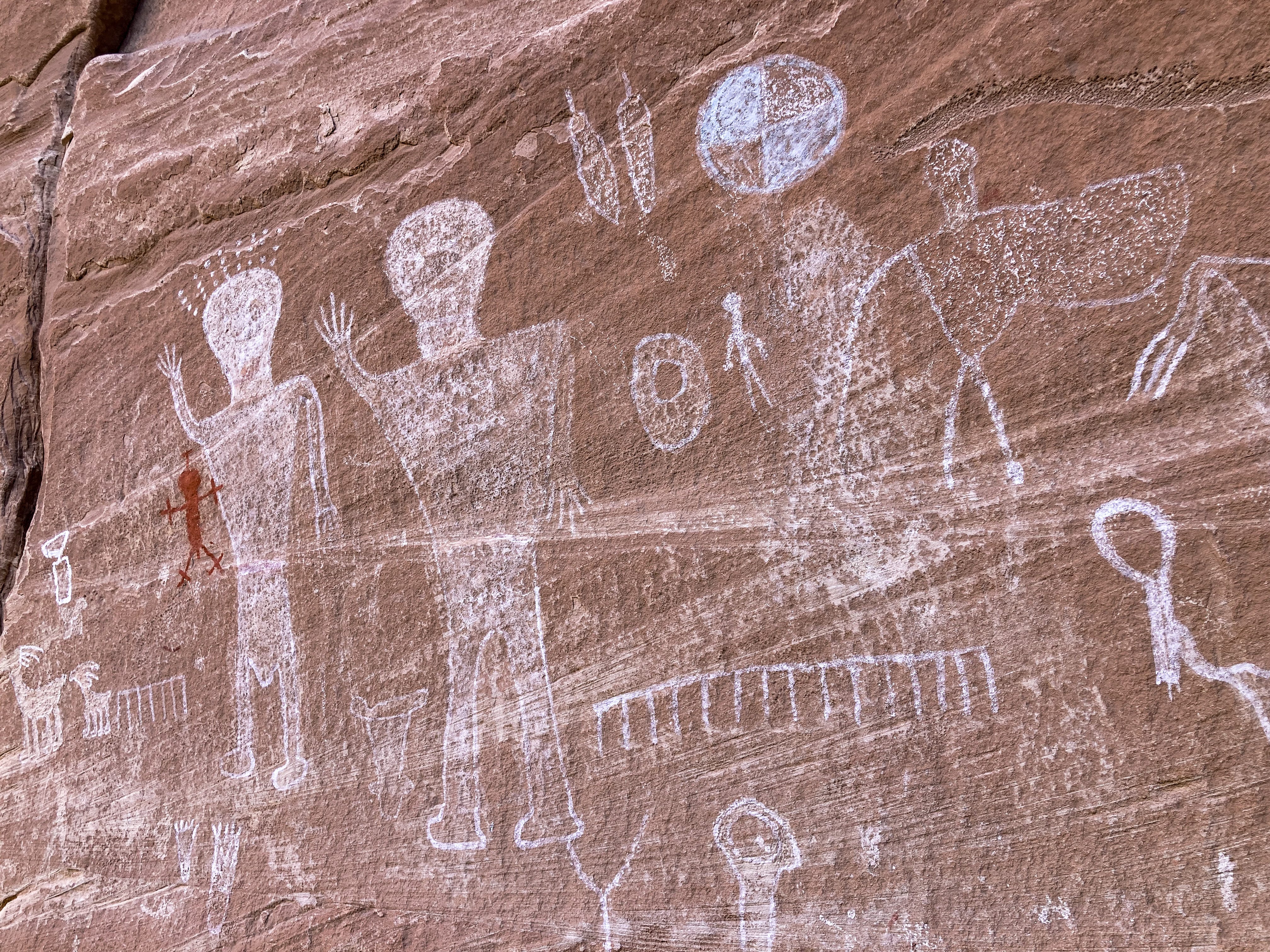
To take action in the interim, consider writing your members of Congress to urge them to oppose this illegal action. Here is a form through Conservation Lands Foundation.
Support the Bears Ears Inter-Tribal Coalition and the Grand Staircase Inter-Tribal Coalition.
Consider supporting the groups that will be doing the heavy lifting to defend the monuments. This can range from donations to subscribing to their newsletters and volunteering for stewardship projects.
Grand Staircase Escalante Partners
Southern Utah Wilderness Alliance
In Utah, Monday is a “Monumental Day of Action” (flyer created by Glen Canyon Institute).


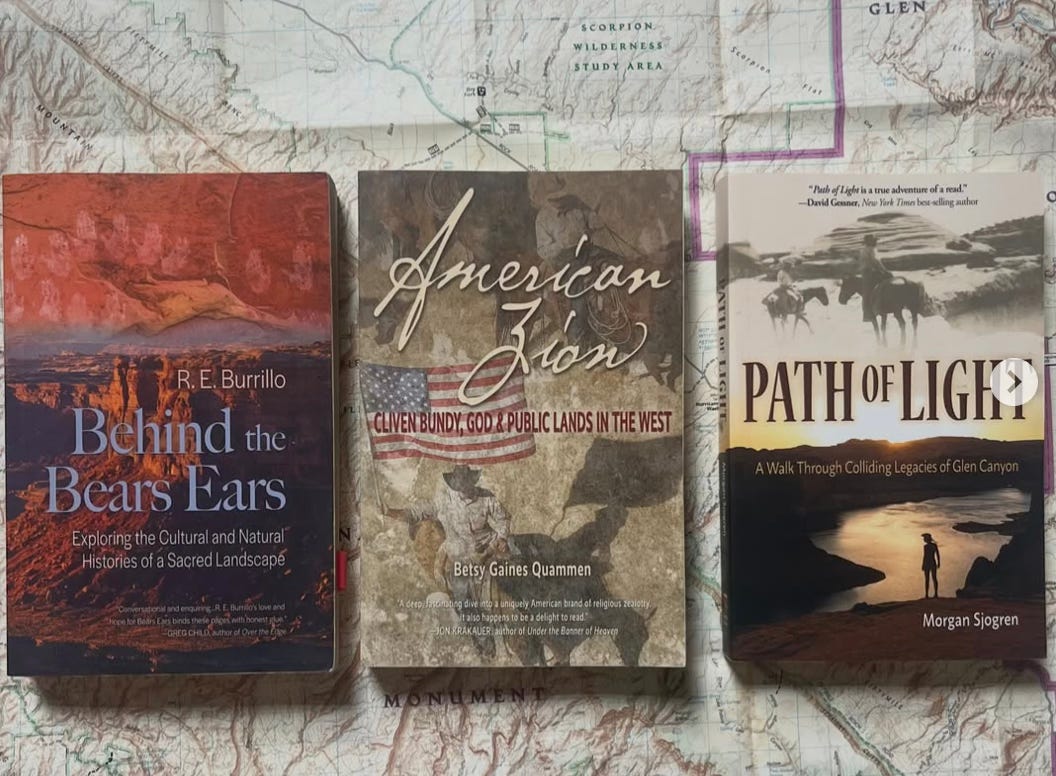
And if you are weary from doom scrolling, may I suggest reading some books that help explain why this week’s monument rollbacks are part of the long arc of colonial settler history. Still, we are part of a legacy of protecting public lands, which are always Indigenous homelands, with every step we take literally (not virtually) across the landscapes of Bears Ears and Grand Staircase-Escalante National Monuments. I am not here to sell you anything. We write books to be read at moments like this. Consider checking these books out from your library, or request that they carry them. If you have a worn copy, share it with a friend. 📖 ✨
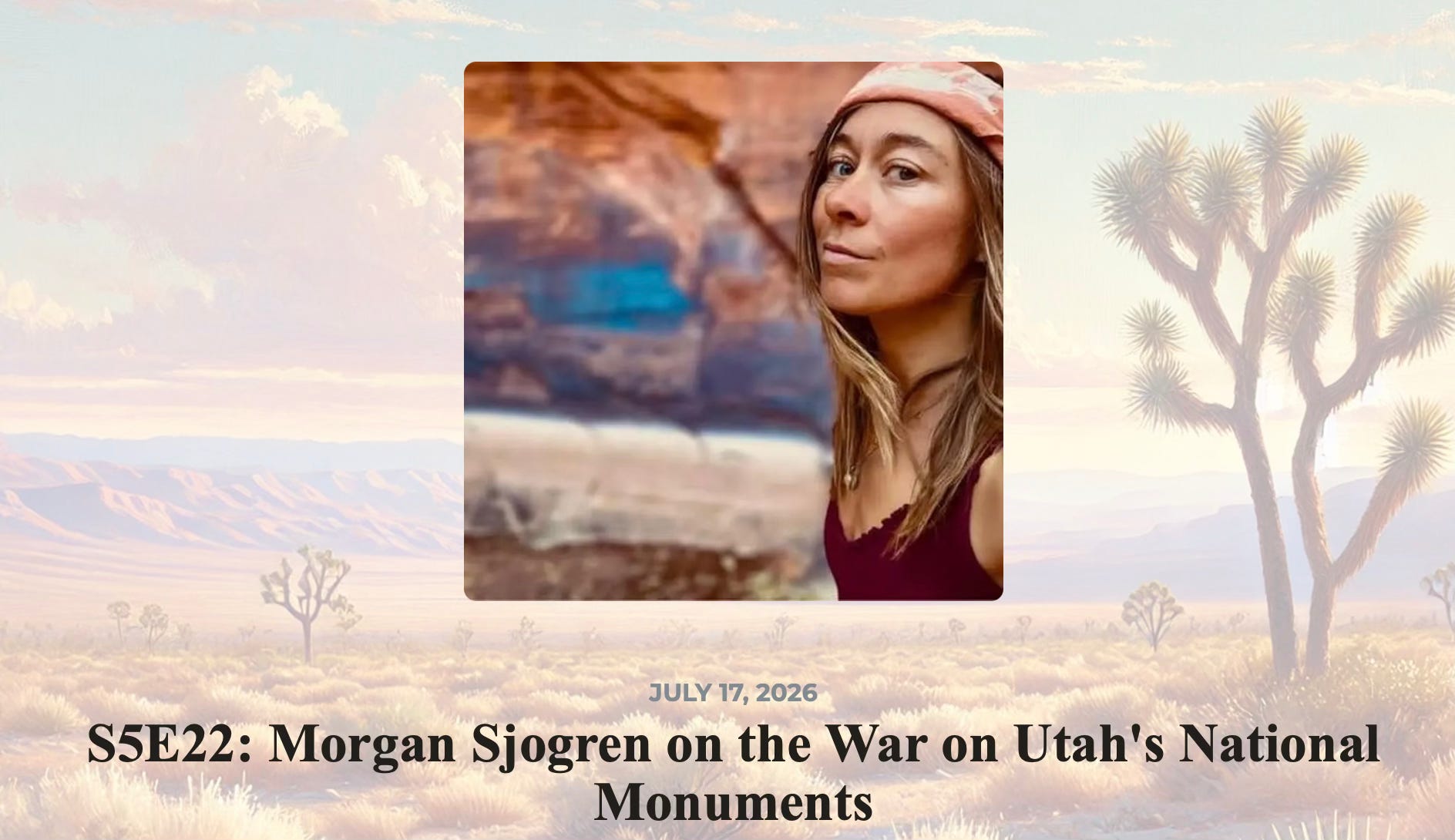
Yesterday, I sat beside the Escalante River and joined 90 Miles From Needles in conversation about the attacks on Grand Staircase-Escalante and Bears Ears National Monument. I am grateful for the nuance of our dialogue that focused on nurturing relationships with these landscapes and the impacts on local (especially Indigenous) communities. This is among the best podcasts about protecting the desert, and I encourage you to keep 90 Miles from Needles in your listening rotation as this administration ramps up its assault on the natural world.
Here is a link to listen to the episode.
Here are two protest songs written and sung by my friend the Slickrock Stranger!
I was flabergasted by those comments, while not at all surprised by the reductions. I guess for Trump and his lackeys anywhere you can't reasonably drive a golf cart is "useless".
Like you, I have to step away into the wild (in my case the Gila National Forest) sometimes just to find the strength to keep fighting the idiocracy now in power. T
oday I got to celebrate a small victory-our state has just added another significant Wildlife Management Area that was formerly a ranch, now will be maintained for hiking, limited hunting (lots of locals are subsistence hunters, only taking what's needed to feed their families) and no motorized recreation.
Keep fighting everyone!